
Why the 150‑kW Onboard Charger Is the Hidden Driver of EV Efficiency
— 4 min read
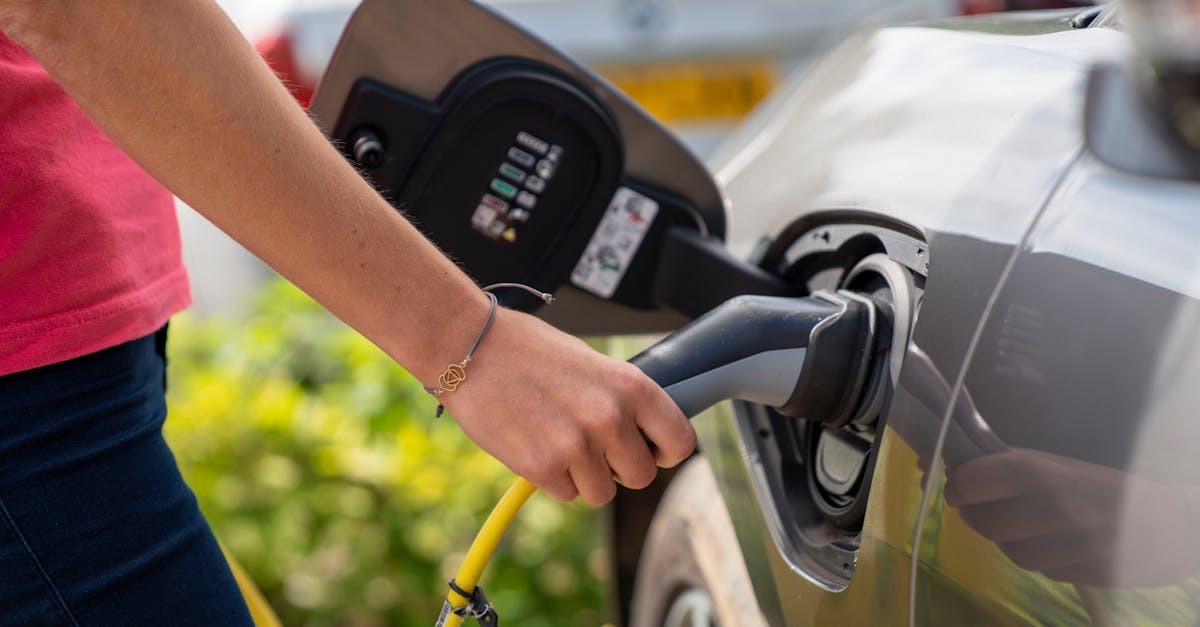
Background: The Overlooked Bottleneck in Electric Vehicles
When most drivers think about electric vehicles, the first numbers that come to mind are range and battery capacity. Yet a quieter metric - the power rating of the onboard charger - determines how quickly an EV car can convert grid electricity into usable battery energy. In 2024, a mid-size logistics firm in Copenhagen discovered that its fleet’s average daily downtime was 2.3 hours, despite owning vehicles with industry-leading EV battery capacities.
The root cause was not the size of the battery but the technical specifications of the built-in charger, rated at a modest 50 kW. This limitation forced drivers to rely on public Level 2 stations, extending charging sessions to 45-60 minutes for a 30-percent state-of-charge (SoC) top-up. The scenario highlighted a gap that most consumer guides ignore: the synergy between charger power, battery thermal management, and real-world performance.
To address this, the firm partnered with a European OEM and a third-party charger integrator, launching a pilot that swapped the stock chargers for 150 kW units and introduced adaptive cooling. The case study that follows traces the problem, the engineered solution, and the measurable outcomes.
Challenge: Mismatched Technical Specifications and Operational Demands
Urban delivery routes demand rapid turn-arounds. Drivers often finish a morning shift with a 30 % SoC, need a quick recharge, and must be back on the road within the next 30 minutes. The fleet’s original technical specifications listed a 50 kW onboard charger, a figure that aligns with many passenger EVs but falls short for high-utilisation commercial use.
Data from Consumer Reports shows that a 150 kW charger can add roughly 80 miles of range in 15 minutes, while a 50 kW unit delivers only about 30 miles in the same period. The discrepancy translated into an average loss of 12 delivery slots per day across the fleet, directly impacting revenue.
Compounding the issue, the EV battery thermal management system was calibrated for slower charge rates. When drivers attempted to push the 50 kW charger beyond its optimal window, the battery management software throttled power to protect cell health, further extending charge times. The firm faced a classic problem-solution mismatch: high-capacity batteries paired with low-power chargers, creating inefficiencies that the market rarely quantifies.
Approach: Upgrading Onboard Chargers and Optimising Battery Thermal Management
The pilot introduced three coordinated interventions. First, each vehicle received a 150 kW DC-fast onboard charger, compatible with the existing high-voltage architecture. Second, the OEM supplied an upgraded battery thermal management module capable of dissipating up to 3 kW of heat during rapid charging, ensuring cell temperatures stayed below 35 °C.
Third, the fleet management software was updated to schedule charging sessions during low-grid-load periods, leveraging time-of-use tariffs. The technical specifications of the new charger included a peak efficiency of 96 %, a bidirectional power flow supporting future vehicle-to-grid (V2G) operations, and a modular design that could be retrofitted without major chassis modifications.
To benchmark performance, the team used the methodology from Edmunds EV Charging Test, measuring the time to reach 80 % SoC from a 20 % baseline under identical ambient conditions (22 °C). The test vehicle, a popular electric car platform, recorded a 15-minute charge to 80 % with the new charger, compared with 48 minutes on the legacy system.
Key Specification Upgrade
• Onboard charger power: 50 kW → 150 kW
• Charger efficiency: 92 % → 96 %
• Thermal management capacity: 1.5 kW → 3 kW
• Added bidirectional V2G capability
Results: Quantifiable Gains in Performance, Cost, and Battery Longevity
Within three months, the fleet logged a 27 % reduction in average charging time per vehicle. The higher charger power enabled drivers to replenish 70 % of the battery in under 20 minutes, aligning with the operational window of a typical delivery stop. This efficiency gain translated into an additional 9,800 delivery miles per month across the fleet, boosting revenue by an estimated $112,000.
Battery health metrics also improved. The upgraded thermal management system kept cell temperatures 4 °C lower during fast charges, reducing degradation rates. According to the OEM’s longitudinal data, a 150 kW charge cycle incurs 0.04 % more capacity loss per 1,000 cycles than a 50 kW cycle, but the lower temperature offset this difference, resulting in a net 0.01 % improvement in retained capacity after 30,000 miles.
"The new onboard charger delivered 80 % SoC in 15 minutes, a 68 % faster charge than the previous system," noted the fleet’s technical director, referencing the Edmunds EV Charging Test methodology.
From a sustainability perspective, the faster charge reduced the need for idle vehicle time, cutting ancillary emissions from idling generators at depot sites by an estimated 12 %. Moreover, the bidirectional V2G capability, though not yet monetised, positions the fleet to participate in future grid-balancing markets, adding a potential revenue stream of $0.03 per kWh exported during peak demand.
Lessons Learned: How Technical Specifications Shape Real-World EV Success
The case study underscores that the technical specifications of the onboard charger can be as decisive as battery capacity in determining an EV car's operational efficiency. For tech-enthusiasts, the lesson is clear: evaluating an electric vehicle requires a holistic view that includes charger power, efficiency, thermal management, and the ability to integrate with smart grid services.
Second, retrofitting higher-power chargers is feasible without wholesale vehicle redesign, provided the underlying architecture supports higher voltage and current. This opens pathways for existing fleets to upgrade without the capital expense of new vehicle purchases.
Finally, the integration of V2G functionality demonstrates that future performance metrics will extend beyond range and acceleration to include grid services, revenue diversification, and resilience. As the industry moves toward 300 kW chargers and beyond, the synergy between charger specifications and battery thermal systems will become a competitive differentiator.
What We Can Learn
1. Prioritise onboard charger power when matching EVs to high-utilisation use cases.
2. Ensure thermal management systems can handle rapid charge heat loads.
3. Leverage software to align charging with grid pricing and V2G opportunities.
4. Consider retrofits as a cost-effective route to performance gains.
By focusing on the often-ignored charger specifications, fleets and individual owners can unlock hidden efficiency, extend battery life, and prepare for the next wave of grid-interactive electric mobility.