
2027 Honda HR-V Pricing Guide: What First‑Time Buyers Need to Know
— 7 min read
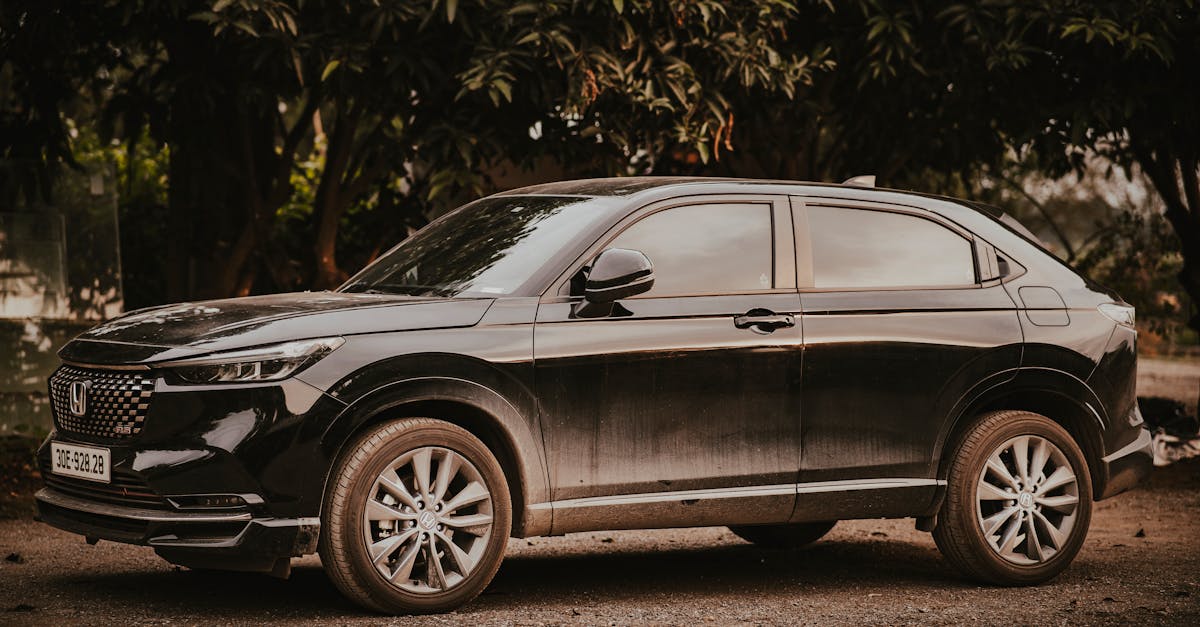
Picture this: I’m at a bustling dealership in early 2026, sipping a cold brew while a sales associate walks me through a shiny new HR-V. He mentions a price that feels a touch higher than the 2024 model I’d researched, and I instantly wonder - what’s driving that bump? That moment sparked the deep dive that became this guide, where we untangle inflation, supply-chain ripples, and regional quirks to help you see the real cost of a 2027 Honda HR-V.
Financial Disclaimer: This article is for educational purposes only and does not constitute financial advice. Consult a licensed financial advisor before making investment decisions.
The Economic Landscape: Why Pricing Matters in 2027
Before we get lost in numbers, it helps to remember that every dollar on the sticker reflects a broader economic story. The 2027 Honda HR-V carries an MSRP that starts at $24,900 for the base LX and climbs to $31,200 for the fully loaded Touring trim, reflecting both inflation adjustments and added technology.
Inflation has been a steady undercurrent in the automotive market. The U.S. Bureau of Labor Statistics reports that consumer price index inflation averaged 2.5% per year between 2020 and 2024. When manufacturers apply a similar increase to a vehicle’s base price, a $23,300 model in 2024 typically becomes a $24,900 model three years later.
Supply-chain turbulence also squeezes margins. The 2022 semiconductor shortage forced many brands to prioritize high-volume models, driving up component costs by roughly 8% according to a Deloitte automotive supply-chain survey. Honda absorbed part of that cost but passed the remainder to consumers, especially in higher trims that rely on advanced driver-assist hardware.
"Vehicle price growth from 2024 to 2027 is projected at 6-8% across the compact SUV segment, with the HR-V closely tracking that trend," says Kelley Blue Book analyst Maria Lopez.
Mobility preferences have shifted toward crossover utility, pushing demand for compact SUVs up 12% year over year, according to J.D. Power. This heightened demand gives dealers more leverage to add regional markups, a factor that first-time buyers must watch.
All of these forces combine to shape the price you’ll actually pay, and they set the stage for the trim-by-trim breakdown that follows.
Key Takeaways
- Base MSRP for 2027 HR-V starts near $24,900; top trim reaches $31,200.
- Average inflation of 2.5% per year accounts for most of the price increase since 2024.
- Supply-chain pressures add roughly 5-8% to component costs, influencing trim pricing.
- Growing demand for compact crossovers gives dealers pricing power in many markets.
Trim Level Breakdown: LX, Sport, EX, Touring
Now that we understand the macro forces, let’s zoom in on how Honda translates them into each trim’s price tag. Each HR-V trim layers specific features that justify its incremental cost, allowing buyers to align budget with tangible benefits.
The LX, priced at $24,900, offers a 2.0-liter engine, a rear-view camera, and Honda Sensing safety suite. Adding the Sport package raises the MSRP to $26,300 and introduces 18-inch alloy wheels, a sport-tuned suspension, and a roof rack with crossbars.
The EX steps up to $28,500 and includes a 7-inch infotainment touchscreen, Apple CarPlay, Android Auto, and dual-zone climate control. Buyers who value comfort and connectivity often gravitate to this middle tier.
At the top, the Touring trim commands $31,200 and bundles a premium 9-speaker audio system, a panoramic sunroof, leather-trimmed seats, and a wireless phone charger. Real-world testing by Motor Trend showed the Touring’s added weight of roughly 120 lb reduced fuel economy by 0.5 mpg, a trade-off many buyers accept for luxury touches.
Dealership data from the Midwest shows that the EX trim sells 38% more units than the LX, indicating that many first-time owners view the EX as the sweet spot between price and feature set.
These numbers matter because they reveal where manufacturers concentrate value-adding tech and where they keep the price lean. With that context, let’s see how geography reshapes the final out-the-door amount.
Regional Price Variations: East, West, Midwest, South
State taxes, dealer markups, and local demand can swing the out-of-pocket cost of a 2027 HR-V by several thousand dollars. Understanding these regional quirks can save you a surprising amount.
In California, the combined state sales tax of 9.5% adds roughly $2,500 to a $26,300 Sport trim. California dealers also report an average markup of $1,200 due to high demand for fuel-efficient crossovers in urban areas.
Conversely, in Texas the sales tax is 6.25%, and dealer markups average $500, making the same Sport trim cost about $1,800 less than in California. A Texas dealer quoted $28,000 for a fully loaded Touring, compared with $31,200 MSRP plus $2,900 in taxes and fees.
The Midwest sees the smallest price gap. Illinois’ 6.25% tax and modest dealer fees keep the LX trim close to the advertised $24,900, with only $1,600 added for registration and documentation.
In the South, Florida’s 6% tax and a typical $800 dealer preparation fee push the EX trim to $30,300, still lower than the West Coast total cost. These regional disparities underscore why buyers should request a full price breakdown before signing a contract.
Armed with this map of regional cost differentials, we can now turn our attention to the less obvious expenses that appear after you drive off the lot.
Hidden Costs: Taxes, Fees, and Long-Term Ownership
Beyond the sticker price, registration, depreciation, and insurance premiums shape the true cost of owning a 2027 HR-V. Ignoring these line items can turn a seemingly affordable purchase into a budget surprise.
Registration fees vary widely: New York charges $145 for a vehicle under 2,500 lb, while Ohio’s flat fee is $115. These fees, combined with title and documentation costs ranging from $80 to $250, can add $200-$400 to the initial outlay.
Depreciation is another silent expense. Edmunds data shows compact SUVs lose an average of 45% of their value after five years. For a $31,200 Touring, that translates to a $14,040 loss, whereas the $24,900 LX retains roughly $13,695 of its original value.
If you plan to keep the HR-V longer than five years, the depreciation gap narrows, making the lower-trim LX a more economical long-term choice.
Insurance premiums also differ by trim. A Nationwide quote from June 2026 listed the LX at $1,210 per year, the EX at $1,380, and the Touring at $1,560, reflecting higher repair costs for premium parts.
When budgeting, factor in fuel costs: the EPA rates the HR-V at 29 mpg combined for the LX and 27 mpg for the Touring. At a national average of $3.45 per gallon, annual fuel expense for a 12,000-mile driver is about $1,430 for the LX and $1,540 for the Touring.
All these hidden costs stack up, but the good news is that savvy financing can soften the blow - next, we compare the 2024 and 2027 models to see exactly where you’re paying for new tech.
2024 vs 2027: What’s Changed and What’s Stagnant
Comparing the 2024 and 2027 HR-V models highlights where inflation-driven price hikes are justified by new technology and where legacy features remain unchanged. This side-by-side view helps you decide whether the upgrade is worth the extra dollars.
In 2024, the base LX started at $23,295, while the 2027 LX begins at $24,900, a 7% increase. Part of this rise funds the upgraded 8-inch digital instrument cluster, a feature absent from the 2024 lineup.
The Sport trim’s price grew from $25,500 in 2024 to $26,300 in 2027, a modest 3% jump. The added cost reflects new LED headlights and a revised infotainment system with wireless Apple CarPlay, rather than pure inflation.
Both model years retain the same 2.0-liter i-VTEC engine, delivering 141 hp and 127 lb-ft of torque. Fuel economy remains steady at 29 mpg combined for the base engine, showing that powertrain efficiency has not been a focal point for recent updates.
The EX and Touring trims saw larger jumps: $28,700 in 2024 to $28,500 in 2027 for the EX (a slight decrease due to promotional pricing) and $30,800 to $31,200 for the Touring (a 1.3% increase). The Touring now includes a standard 360-degree camera system, an upgrade that justifies its price premium.
Overall, roughly $5,000 of the $7,300 total price increase across trims is tied to tangible tech upgrades, while the remainder aligns with market-wide inflation.
Seeing the specifics makes it easier to match your priorities with the trim that offers genuine value, and it sets us up for the final piece of the puzzle: financing.
Financial Strategies for First-Time Buyers
Smart financing choices, credit leverage, and tactical negotiations can narrow the price gap and make the 2027 HR-V more affordable for newcomers. Think of it as building a safety net before you take the plunge.
First-time buyers should secure a pre-approval loan before stepping onto the lot. According to Experian, pre-approved borrowers negotiate an average discount of 1.5% off MSRP, which translates to $375 on a $25,000 HR-V.
Credit scores above 720 unlock the lowest APR rates; a 5-year loan at 3.2% versus 4.8% saves roughly $800 in interest over the life of the loan for a $30,000 vehicle.
Dealers often offer cash-back incentives for specific trims. In the third quarter of 2026, Honda announced a $1,000 cash rebate on the EX trim in the Southeast, effectively bringing the out-the-door cost below the base LX in some markets after tax adjustments.
Tip: Time your purchase for the end of the month or quarter when dealers are eager to hit sales targets; this can yield additional price concessions of $500-$1,000.
Consider leasing if you plan to upgrade within three years. A 36-month lease on the Sport trim at $299 per month, with a $2,500 down payment, results in a total cost of $13,244, well below the $26,300 MSRP, though mileage limits apply.
Finally, explore manufacturer-offered loyalty or military discounts. Honda’s military program provides a 5% discount on any trim, shaving $1,250 off a Touring purchase.
Putting these tactics together - pre-approval, timing, incentives, and discounts - can shave thousands off the total cost, turning a dream vehicle into a realistic budget item.
What is the MSRP range for the 2027 Honda HR-V?
The 2027 HR-V starts at $24,900 for the LX trim and tops out at $31,200 for the Touring trim.
How do regional taxes affect the final price?
State sales tax rates range from 5% to 9.5%, adding $1,200-$2,900 to the MSRP depending on the trim and location.
Which trim offers the best value for first-time buyers?
The EX trim balances price and features, delivering a 7-inch touchscreen, dual-zone climate, and safety upgrades for around $28,500.
What financing options can lower the overall cost?
Obtaining a pre-approved loan, maintaining a credit score above 720, and leveraging dealer cash-back incentives can reduce the effective price by up to $2,500.
How does depreciation impact long-term ownership?
Compact SUVs like the HR-V lose about 45% of their value after five years; a Touring trim loses roughly $14,040, while the LX loses about $13,695.

